
First class cricket is the traditional form of competitive cricket played over three or more scheduled days. It generally gives both teams two innings, allowing batters to build long innings, bowlers to deliver extended spells, and captains to develop strategies over several sessions. Test cricket is the best known international form of first class cricket.
Cricket has three major official classifications at the top level: first class cricket, List A cricket and T20 cricket. First class cricket includes recognised multi day matches, while List A and T20 cover limited overs competitions. Domestic tournaments such as India’s Ranji Trophy, Australia’s Sheffield Shield and England’s County Championship are important parts of first class cricket.
What Is First Class Cricket?
First class cricket is an officially recognised form of cricket played between two teams of 11 players on natural turf pitches, with a scheduled duration of at least three days. Matches generally follow a two innings structure for each team and must satisfy the applicable official classification criteria.
The International Cricket Council (ICC) establishes the classification framework for official cricket, while the relevant governing bodies determine the status of domestic matches. Official recognition is essential because a match does not automatically become first class simply because it lasts three or more days.
The classification applies to eligible men’s and women’s matches. Therefore, recognised women’s Test matches also qualify as first class cricket under the applicable ICC regulations.
How Does First Class Cricket Work?
First class cricket follows a longer format than limited overs cricket. Each team generally has two innings, and there is no standard fixed maximum number of overs per innings. An innings usually ends when the batting side is dismissed, declares, forfeits its innings where permitted, or reaches another applicable ending condition.
Matches are commonly scheduled for four or five days, although the official classification permits matches scheduled for three days or longer. Captains must manage batting time, bowling resources, declarations and field placements while considering the time remaining to achieve a result.
Key Rules of First Class Cricket
- Match duration: At least three scheduled days.
- Players: Normally 11 players per team.
- Innings: Generally two innings per team.
- Pitch: Matches are played on natural turf under the applicable regulations.
- Overs: No standard fixed innings limit, although daily over requirements apply under competition playing conditions.
- Follow on: A team batting first may require its opponent to bat again immediately if the required first innings lead is achieved.
- Results: Matches can end in a win, loss, tie or draw, depending on the applicable rules.
- Official status: The match must satisfy the relevant classification criteria and receive the required recognition.
What Is the Follow On Rule in First Class Cricket?
The follow on is an important rule in first class cricket. It allows the team batting first to require the opposition to begin its second innings immediately when the first team has established a sufficiently large lead. Enforcing the follow on is a choice, not an automatic requirement.
The minimum first innings lead required depends on the scheduled duration of the match.
| Scheduled match duration | Minimum lead required |
| Five days or more | 200 runs |
| Three or four days | 150 runs |
| Two days | 100 runs |
| One day | 75 runs |
These thresholds apply to two innings matches under the relevant Laws of Cricket. The one day threshold does not mean that ordinary ODI or T20 matches have a follow on, because those formats do not use the same two innings structure.
How Many Overs Are Bowled Per Day in First Class Cricket?
First class cricket does not have a universal fixed number of overs for an entire innings, but competition playing conditions set daily over targets. For example, men’s Test cricket generally requires a minimum of 90 overs on days other than the final day, subject to the applicable playing conditions and provisions for interruptions. The County Championship has commonly used a target of 96 overs per day.
Actual overs bowled can vary because of weather, interruptions, slow over rates and the specific rules of a competition. Therefore, the absence of a fixed innings limit does not mean that first class cricket has no daily over structure.
What Is the Difference Between First Class Cricket and Test Cricket?
Test cricket is a specific form of international first class cricket played between eligible national teams under ICC regulations. First class cricket is the broader classification, covering recognised domestic competitions as well as qualifying international matches.
For example, a Test match between India and Australia is first class cricket. A recognised Ranji Trophy match between two domestic teams also qualifies, even though it is not an international Test.
The distinction is that Test cricket is an international format, while first class cricket is a wider official classification that includes qualifying domestic matches.
First Class Cricket vs ODI vs T20 Cricket
Source: mykhel
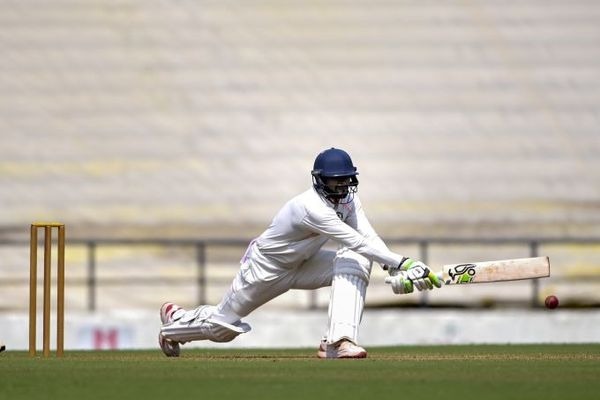
First class, List A and T20 cricket are the three major classifications used to distinguish these forms of top level cricket. First class matches use a multi day structure, while List A matches are limited overs games that include ODIs and recognised domestic one day matches. T20 cricket limits each team’s innings to 20 overs in the standard format.
| Feature | First Class Cricket | ODI Cricket | T20 Cricket |
| Scheduled duration | Three or more days | Usually one day | Usually a few hours |
| Overs per innings | No standard fixed limit | Normally 50 per team | Normally 20 per team |
| Innings per team | Generally two | One | One |
| Main focus | Patience, endurance and tactics | Balanced scoring and wicket management | Fast scoring and tactical execution |
| Common examples | Ranji Trophy, Sheffield Shield, County Championship | ICC Cricket World Cup, bilateral ODI series | ICC Men’s T20 World Cup, IPL |
| Possible result | Win, loss, tie or draw | Win, loss or tie, with other outcomes under applicable rules | Win, loss or tie, with other outcomes under applicable rules |
List A cricket is the recognised limited overs classification that includes domestic one day competitions and qualifying ODIs. Similarly, recognised domestic T20 matches belong to the T20 classification. These categories are not interchangeable with first class cricket.
When Was First Class Cricket Officially Defined?
The formal recognition of first class cricket developed over several stages. The Marylebone Cricket Club (MCC) formalised the classification in England in May 1894, with official first class status applying to designated matches from 1895.
The Imperial Cricket Conference formally defined first class cricket internationally on 19 May 1947. The definition explicitly had no retrospective effect, meaning it was not intended to reclassify earlier matches automatically. This helps explain why historical cricket records can differ over the status of matches played before formal classification rules were established.
What Are the Main First Class Cricket Tournaments?
First class cricket is played through established domestic competitions in several cricketing nations. These tournaments test batting technique, bowling endurance, fielding standards and tactical decision making over multiple days.
The table below lists major competitions, their countries and their usual scheduled match durations. Individual seasons and special fixtures can have different arrangements.
| Competition | Country or region | Typical match duration |
| Ranji Trophy | India | Four days |
| Sheffield Shield | Australia | Four days |
| County Championship | England and Wales | Four days |
| Duleep Trophy | India | Commonly four or five days, depending on the season’s format |
| Irani Cup | India | Five days |
| Plunket Shield | New Zealand | Four days |
| Quaid e Azam Trophy | Pakistan | Four days |
| CSA 4 Day Series | South Africa | Four days |
| West Indies Four Day Championship | West Indies | Four days |
| National Cricket League | Bangladesh | Four days |
1. Ranji Trophy
Source: Revsports
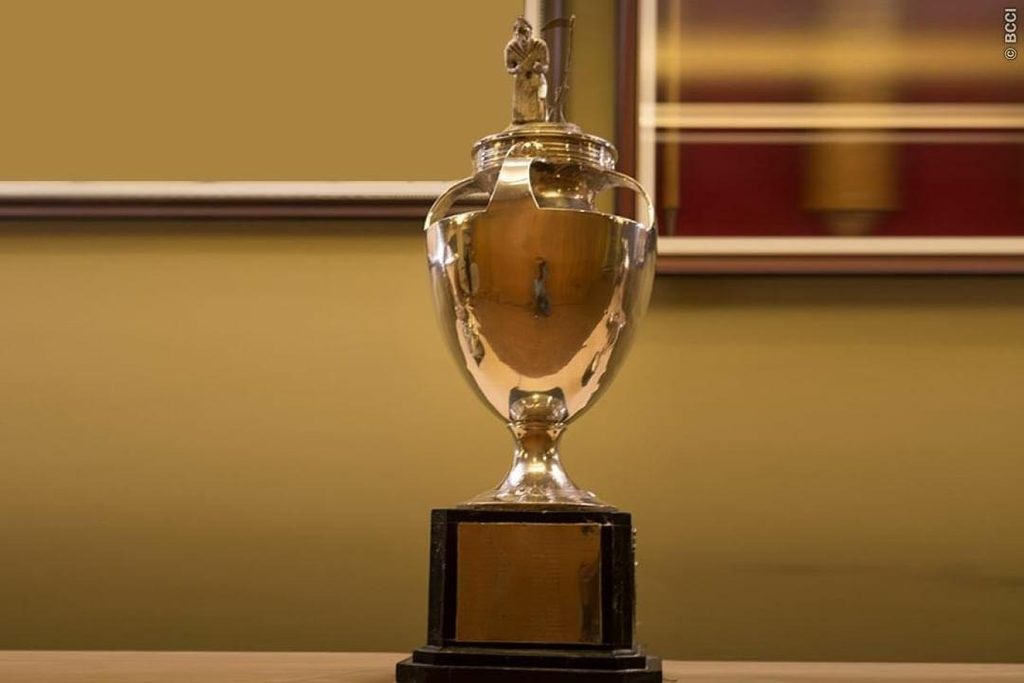
The Ranji Trophy is India’s leading domestic first class cricket competition. Teams representing states and eligible cricket associations compete across multiple rounds, with matches testing batting technique, bowling discipline and adaptability to different Indian pitches.
Strong performances in the Ranji Trophy can help players earn selection for higher levels of domestic cricket and the Indian Test team. Its four day matches provide a demanding environment for developing the skills required in the longer format.
2. Sheffield Shield
The Sheffield Shield is Australia’s premier domestic first class competition. Teams representing Australian states compete in a four day format that tests concentration, bowling control and the ability to adapt to changing pitch conditions.
The tournament has played an important role in developing players for Australia’s national Test team. Its longer matches require batters to build substantial innings and bowlers to maintain pressure over extended spells.
3. County Championship
The County Championship is England’s principal domestic first class competition. English and Welsh counties compete in four day matches throughout the season, with conditions often rewarding seam bowling, swing and patient batting.
The competition has a long history of featuring leading domestic and overseas cricketers. It remains an important setting for players to develop their red ball skills and prepare for international cricket.
4. Duleep Trophy
The Duleep Trophy is an Indian domestic first class competition featuring leading domestic players. Its team structure has changed across seasons, including zonal teams and teams selected from groups such as India A, India B, India C and India D.
The competition gives leading cricketers an opportunity to face strong opposition and demonstrate their readiness for higher levels of cricket. Its scheduled match duration can vary with the season’s regulations and format.
5. Irani Cup
Source: mykhel
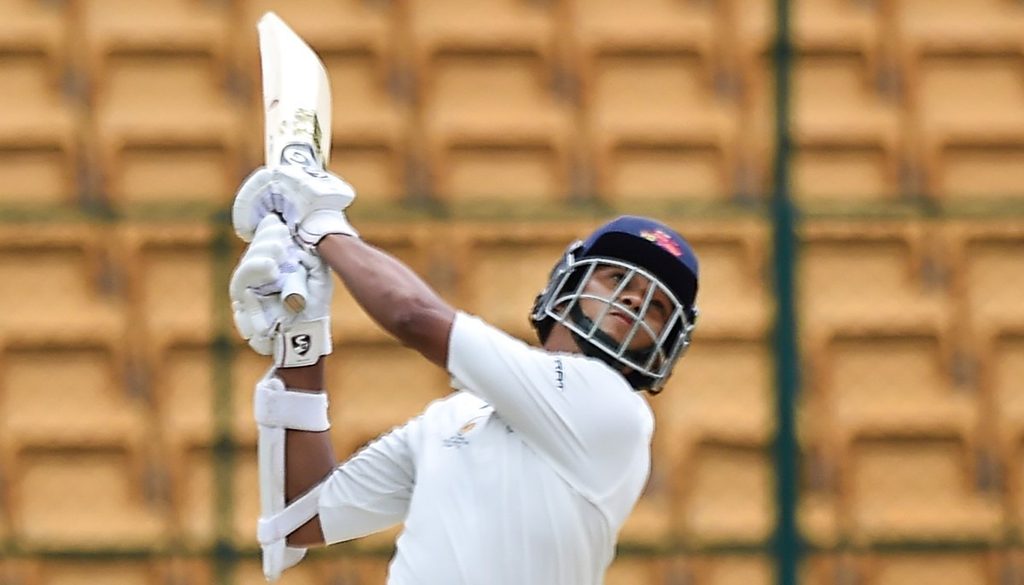
The Irani Cup is an important Indian first class fixture traditionally played between the Ranji Trophy champions and a Rest of India team. It brings together leading domestic performers and selected players from across the country.
The fixture is generally scheduled for five days and provides a strong test of batting, bowling and match management in the longer format.
6. Plunket Shield
The Plunket Shield is New Zealand’s major domestic first class competition. It features teams representing the country’s domestic cricket associations in a four day format.
The tournament gives players experience in sustained batting and bowling contests and helps develop cricketers for New Zealand’s international Test side.
7. Quaid e Azam Trophy
The Quaid e Azam Trophy is a leading domestic first class competition in Pakistan. It provides a platform for regional and departmental cricket structures, depending on the season’s competition regulations, and is generally played over four days per match.
The tournament has an important role in identifying and developing players for Pakistan’s longer format teams.
8. CSA 4 Day Series
South Africa’s CSA 4 Day Series is a major domestic first class competition. As its name indicates, matches are generally scheduled over four days.
The competition tests players’ ability to handle seam movement, changing conditions and extended periods of play while providing a route towards higher levels of South African cricket.
9. West Indies Four Day Championship
The West Indies Four Day Championship is a regional first class competition involving teams from across the Caribbean. Its four day matches give players opportunities to build long innings and develop bowling consistency.
The competition also helps selectors assess domestic players for regional and international cricket.
10. National Cricket League
Bangladesh’s National Cricket League is a domestic first class competition generally played over four days per match. It gives regional teams an opportunity to compete in the longer format and helps develop players for Bangladesh’s Test side.
The tournament tests patience, technique and the ability to perform across multiple sessions in varied playing conditions.
Why Is First Class Cricket Important?
First class cricket develops the skills needed for long format matches. Batters learn to concentrate over extended periods, defend effectively, judge scoring opportunities and build innings without a fixed innings overs limit.
Bowlers develop control, stamina and the ability to create pressure through sustained spells. Captains gain experience in declarations, field placements, bowling changes and match situations that can evolve over several days.
These skills are particularly valuable for players who aim to represent their countries in Test cricket. Strong performances in recognised domestic first class competitions can help players demonstrate their readiness for international selection.
Can a First Class Match End in a Draw?
Yes. A first class match can end in a draw when the scheduled playing time expires without either team achieving a result under the applicable rules. A draw is different from a tie, which occurs when both teams finish with exactly the same score after all relevant innings have been completed.
Draws are possible because first class cricket allows matches to continue across several days. Weather interruptions, slow scoring, strong batting performances and limited time can prevent a team from completing a victory.
FAQs
First class cricket is an officially recognised form of multi day cricket played over at least three scheduled days. Teams generally have two innings each, and the format tests batting technique, bowling endurance and tactical planning.
Test cricket is a form of international first class cricket played between eligible national teams. First class cricket is a broader classification that also includes recognised domestic competitions such as the Ranji Trophy and County Championship.
There is no standard fixed maximum number of overs per innings. However, competition playing conditions can set daily over targets. Men’s Test cricket generally targets at least 90 overs on days other than the final day, subject to the applicable conditions.
The follow on allows the team batting first to ask the opposition to bat again immediately after the first innings if the required lead is reached. The threshold is 200 runs in matches scheduled for five days or more, 150 in three or four day matches, 100 in two day matches and 75 in one day two innings matches.
Yes. Eligible women’s Test matches are classified as first class cricket under the applicable ICC classification framework.
Yes. Recognised Ranji Trophy matches are classified as first class cricket and are generally scheduled for four days.
Yes. A match can end in a draw if neither team achieves a result before the scheduled time expires. A tie occurs when the scores are equal under the applicable match rules.
First class matches must be scheduled for at least three days. Many domestic competitions, including the Ranji Trophy, Sheffield Shield and County Championship, generally schedule matches for four days, while Test matches and the Irani Cup are typically scheduled for five days.
Conclusion
First class cricket is the traditional long format of competitive cricket, played over three or more scheduled days under official classification rules. It includes international Test matches and recognised domestic tournaments such as the Ranji Trophy, Sheffield Shield, County Championship and Plunket Shield.
Its defining features include the two innings structure, the follow on rule, daily over requirements and the possibility of a draw. Understanding these rules makes it easier to distinguish first class cricket from List A and T20 cricket while appreciating how domestic competitions prepare players for international Test matches.